

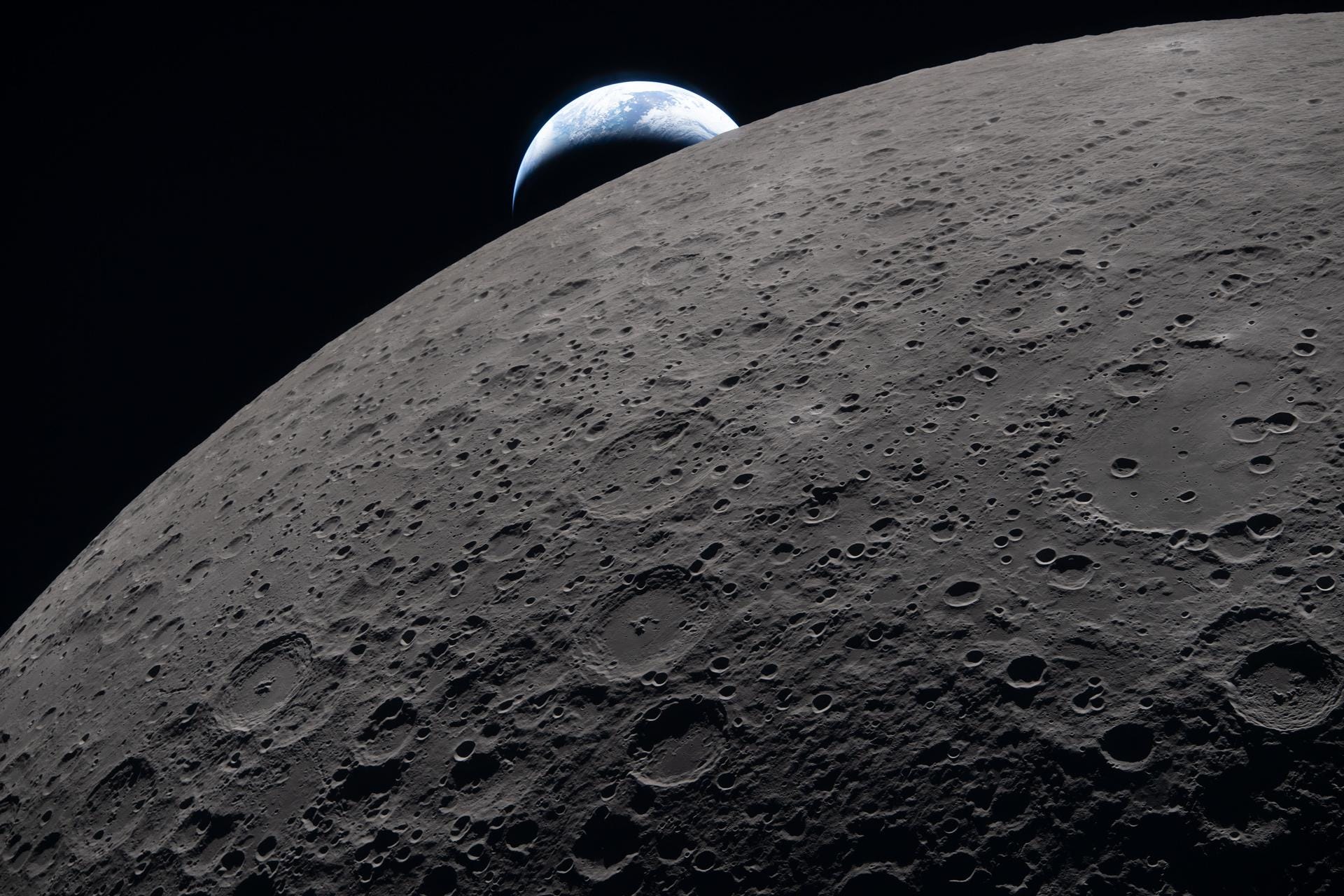
Four humans flew around the Moon yesterday.
Let that sit for a second.
Not in a simulation. Not in a render. Not on a screen. Four people left this planet, crossed a quarter of a million miles of nothing, passed over the far side of the Moon where no signal reaches, and came back with photographs of places no human eyes have ever seen.
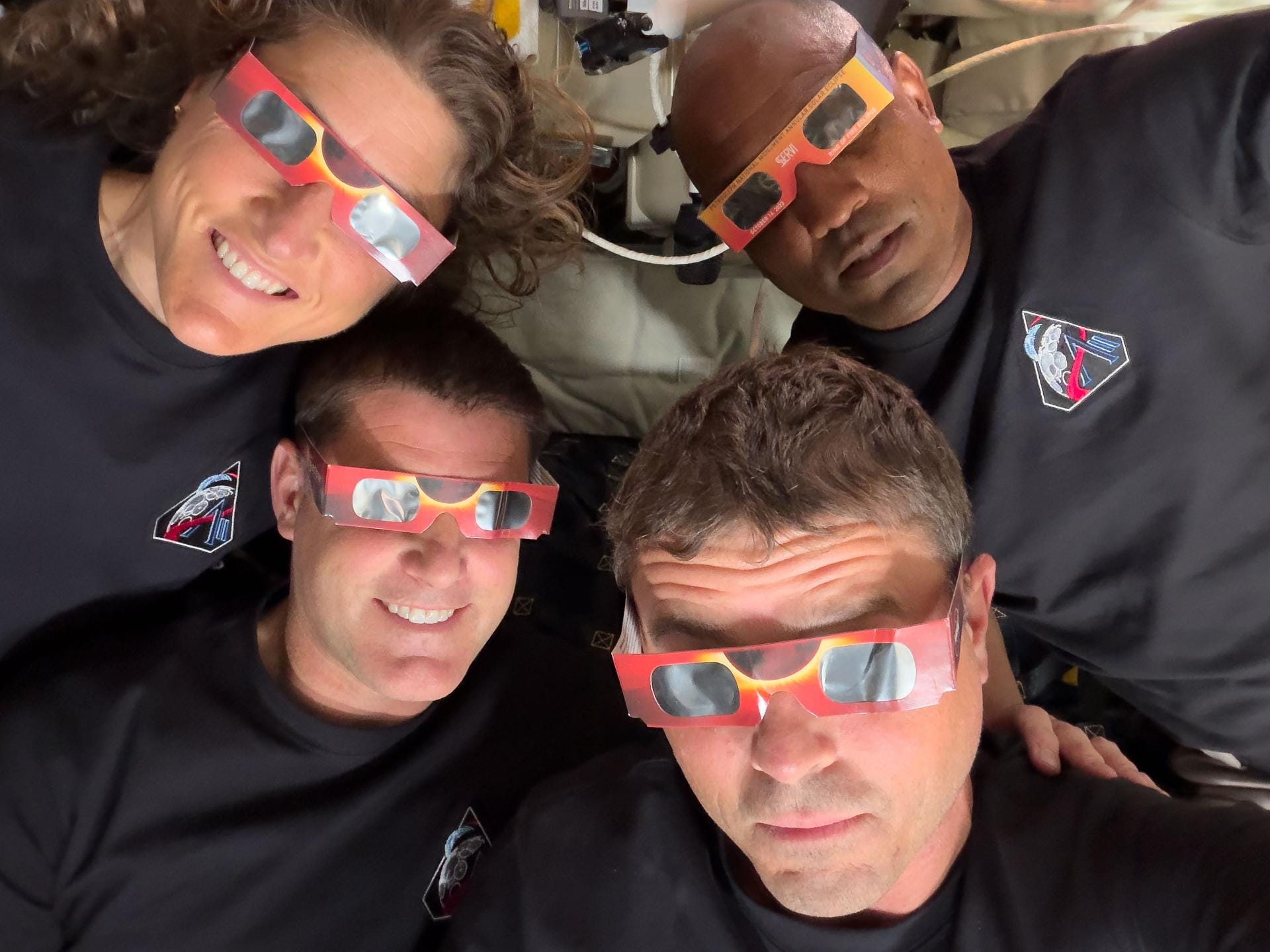
One of those images is a solar eclipse. From space. The Moon backlit by the Sun while Earth hangs somewhere behind them, out of reach, trusting that the math holds. (see below)

And somehow, the first thing people want to talk about is the budget.
I am not here to nitpick this mission. I am not here to debate cost overruns or timeline delays or whether SpaceX could have done it cheaper. Maybe they could have. That is not the point.
The point is that NASA has been an American institution for nearly seventy years. Before most of us were born, this agency was already pushing human beings beyond the atmosphere. The technology that came out of the space program is woven into everything we touch. Your phone, your hospital, your weather forecast, your GPS, the materials in your car. The entire modern world runs on the back of problems that had to be solved because someone decided we were going to the Moon.
And we did it.
And then we stopped.
For over fifty years, no human being has been in the vicinity of the Moon. Think about that. We built the capability, proved it worked, planted a flag, and then walked away from it like it was a finished project. Like curiosity has a shelf life. Like the edge of what is possible is something you visit once and then move on from.
Artemis II is not just a test flight. It is a statement that we have not given up on the thing that made us extraordinary in the first place: the willingness to go somewhere we have no business going, for no reason other than the fact that it is there and we are capable.
That is not waste. That is the human project working exactly the way it should.
We live in an era that worships efficiency above all else. Everything must be optimized, justified, monetized. Every expenditure must produce a measurable return. And inside that framework, sending humans around the Moon looks like a luxury we cannot afford.
But efficiency without ambition is just maintenance. And a civilization that only maintains is a civilization that has already begun to die.
The images from Artemis II do not care about your opinion of government spending. They do not need your approval. They exist because four people had the courage to sit on top of a controlled explosion and trust a system built by thousands of other human beings who decided that the Moon was worth reaching for again.
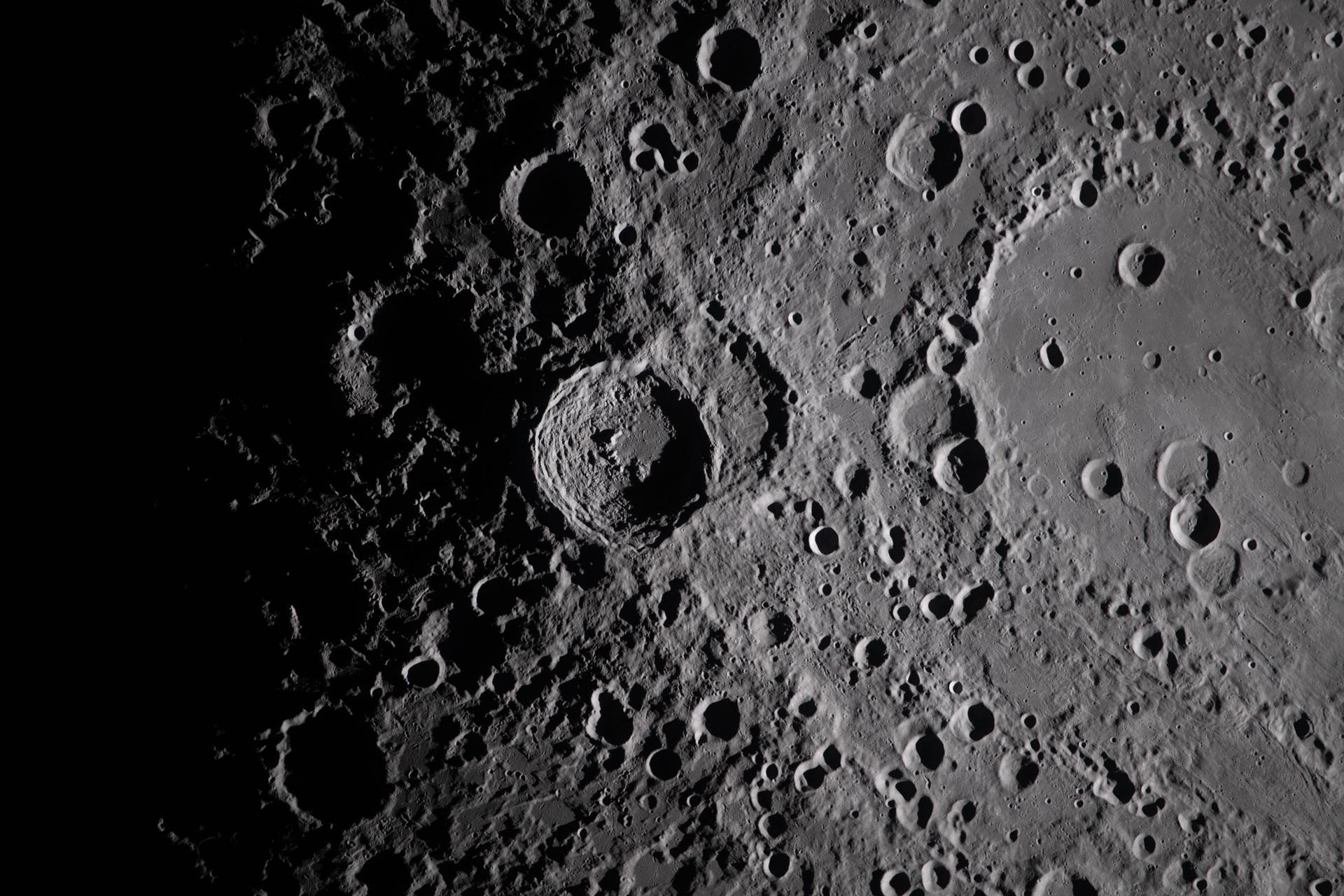
The craters on the far side of the Moon are older than anything on Earth. Older than language. Older than memory. And yesterday, human beings looked at them through a window. (see below)
I do not know how to explain what that means to someone who is not already feeling it.
But if you are feeling it, you do not need the explanation.
We went back. And it still takes your breath away.
-Justin Shank
Images can be seen here: NASA FLYBY IMAGES