

A woman sat down at nine to write a report due at noon.
By nine-forty she knew the full production history of a volcano documentary from 1996, the going price of a used kayak she does not want, and which of her former classmates now owns a boat. The report had a title. The title was “Report.”
Nobody broke in. Nothing dramatic happened. There was just a goblin, and the goblin made better offers.
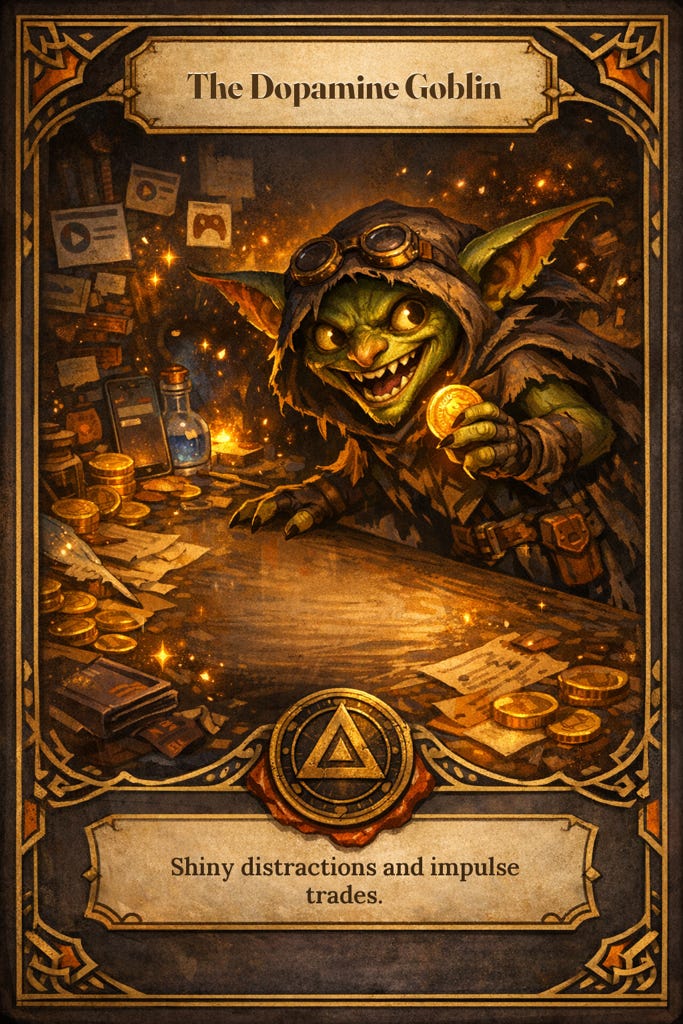
That is the first thing to know about the Dopamine Goblin: he is not a thief. He is a broker. A thief you can lock out. A broker you live with, because he handles the one currency your brain actually accepts, and he handles all of it. The report pays in two weeks, in relief, maybe. The kayak pays now. The goblin knows the exchange rate and he never sleeps.
The books tell you to beat him with willpower. Willpower is an arm-wrestling match with the one who owns the table. You will win some rounds. He only has to win the afternoon.
The deck’s countermove is the Goblin Deal, and it works because of the second thing to know about goblins: they are lawyers. They honor a signed contract to the letter. So you sign one. Twenty minutes on the report, and then the goblin gets ten of whatever he wants. Kayaks. Volcanoes. The classmate with the boat. Set a timer, because the goblin will argue the terms, and the timer ends the argument. The timer is the contract. The card compresses the whole treaty to six words: make the reward serve the work.
You do not banish the Dopamine Goblin. There is no version of you without him. You put him on retainer.
The moral: willpower is not a plan. A deal is a plan.
The Dopamine Goblin and the Goblin Deal are cards in Dragons & Distractions, a deck for ADHD brains: monsters that name the pattern, rituals that name the countermove. Digital kit, $8: https://whatsyourwhy85.gumroad.com/l/ogeic